 Evelyn Reed
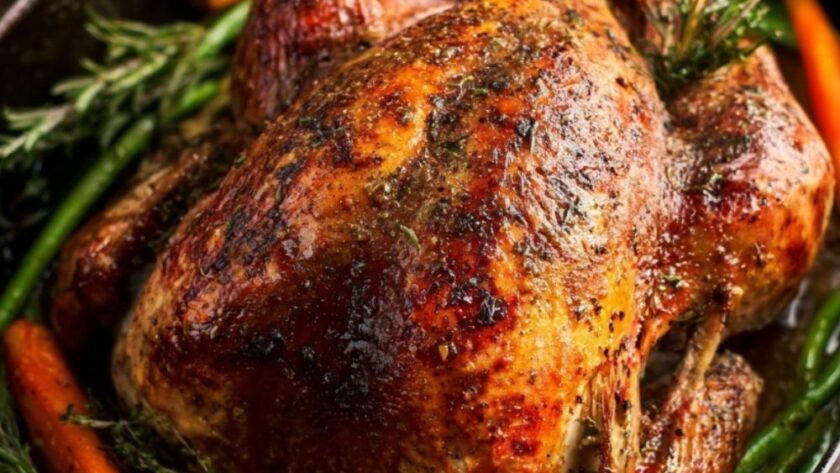
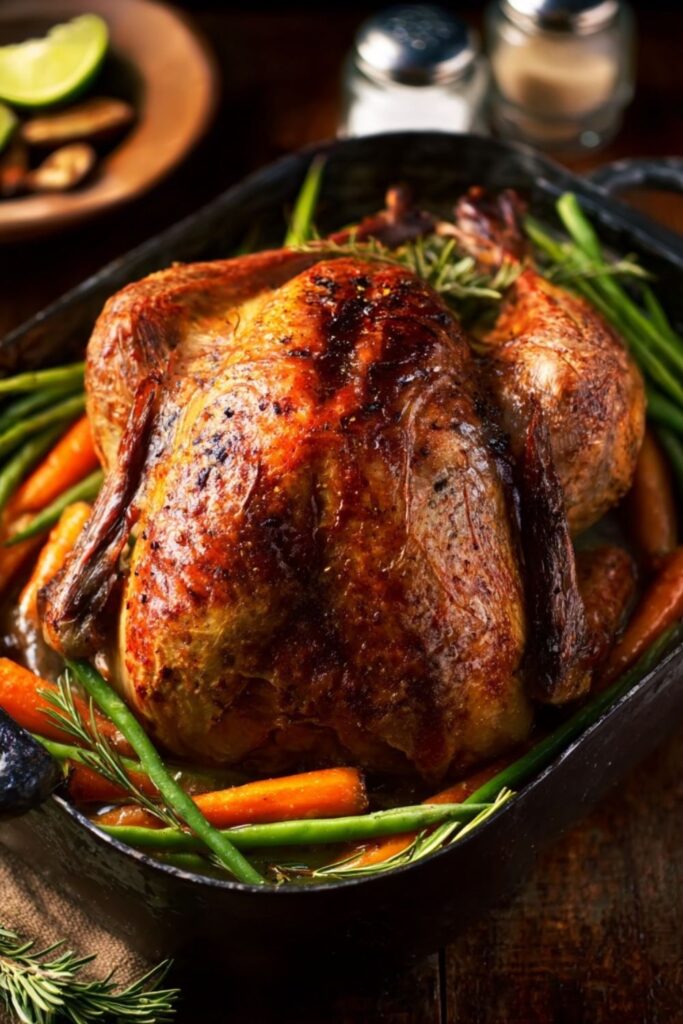
 This roast turkey offers a mellow, comforting flavour and moist texture, ideal for those following a low acid diet. The butter and herbs infuse richness without acidity. The method is straightforward and fairly hands‑off, so you can focus on side dishes. Because we removed the lemon (a high acid ingredient) and rely on herbs, this turkey becomes gentle on the stomach while still being special enough for a holiday or gathering.
Ingredients Needed:
- 10–14 lb (≈4.5–6.5 kg) turkey (fresh or fully thawed)
- ¾ cup unsalted butter, softened
- 2 tsp (optional) mild herb zest substitute (see notes below)
- 1 Tbsp fresh thyme leaves
- 1 Tbsp chopped fresh rosemary
- Kosher salt and freshly ground black pepper (use salt in moderation to keep sodium reasonable)
- 1 medium yellow onion, quartered
- 8 garlic cloves, smashed
- ½ bunch fresh parsley, chopped
How To Make Low Acid Roast Turkey:
- Bring to room temperature & preheat:
Let the turkey rest 1 hour at room temperature. Meanwhile, position an oven rack one level below center, and preheat oven to 350 °F (175 °C) near the end of resting. - Prepare turkey & cavity seasoning:
Remove neck and giblets. Pat the turkey dry inside and out with paper towels. Tuck wings under. Season the cavity lightly with salt and pepper. - Prepare herb butter mixture & apply under skin:
In a bowl, stir together softened unsalted butter, thyme, rosemary, and (if used) the mild herb “zest substitute.”
Gently loosen the skin over the breast by sliding the back of a wooden spoon between skin and meat, being careful not to tear the skin.
Spread about one‑third of the butter mixture under the skin over the breast and sides. Then rub the remaining butter over the outer skin (not the underside). Season the outside skin with salt and pepper. - Stuff vegetables & herbs into cavity:
Place the onion quarters, smashed garlic cloves, and chopped parsley into the turkey cavity. Optionally, tie the legs together with kitchen twine for better presentation. - Roast:
Place turkey on a roasting rack inside a roasting pan. Roast in the preheated oven until the thickest part of the thigh reads about 175 °F (80 °C) (without touching bone) and the breast reads 165 °F (74 °C), approximately 2 h 20 min to 3 h 30 min (depending on size). Tent foil over turkey as needed to prevent excessive browning. - Rest & carve:
Let the turkey rest for 30 to 60 minutes before carving. This lets juices redistribute so meat stays moist.
Recipe Tips:
- Use unsalted butter to control added salt, which is important in many sensitive diets.
- Omit the lemon zest (acidic) and instead try a non‑acidic herb zest option — for example, a finely grated mild herb root (like peeled parsley stalks or celery leaf stalks) or a pinch of dried oregano or marjoram.
- If browning too quickly, tent loosely with foil to protect the skin.
- Use an instant‑read thermometer to avoid overcooking and drying the meat.
- Make sure the turkey is completely thawed before cooking to allow even heating.
How to Store & Reheat:
- Room Temperature: Serve within 2 hours.
- Fridge: Store in airtight containers. Good for up to 3–4 days.
- Freezer: You may freeze carved turkey pieces (wrapped tightly) for up to 2–3 months. Reheat gently in a low oven (~300 °F / 150 °C) with a splash of broth or water covered with foil so it doesn’t dry out.
Nutrition Facts (approximate per serving, for 12 servings):
- Calories: ~280 kcal
- Protein: ~32 g
- Fat: ~15 g
- Carbs: ~1 g
- Fibre: ~0 g
- Sugar: ~0 g
FAQs:
Does this recipe truly meet a low acid diet?
Yes — by omitting lemon zest and avoiding vinegar or citrus, the recipe removes common high‑acid ingredients while still using gentle herbs and butter for flavor.
Can I use a citrus substitute to mimic zest flavor without acid?
You can try a small amount of zest of a very low acid citrus if tolerated, or use herb‑based zest substitutes (like grated parsley stems or celery stalks) to add aroma without significant acid.
Is the skin safe for a low acid diet?
Yes — turkey skin is not acidic. However, if you have digestive sensitivity, you may choose to remove skin after roasting.
Can I brine the turkey beforehand?
Traditional brines often use salt + acid (vinegar or citrus). For low acid diets, avoid acidic brines. If you wish to brine, use a salt‑only or mild herb brine (without citrus or vinegar) for a short time, but monitor how your body tolerates it.
What side dishes pair well with low acid turkey?
Gentle, low acid sides like steamed vegetables (carrots, zucchini, green beans), mashed potatoes with unsalted butter, rice pilaf (no lemon), or mild butternut squash work very well.
Try More Recipes:
Low Acid Roast Turkey
Course: DinnerCuisine: AmericanDifficulty: Easy10-14
servings10
minutes3
hours30
minutes280
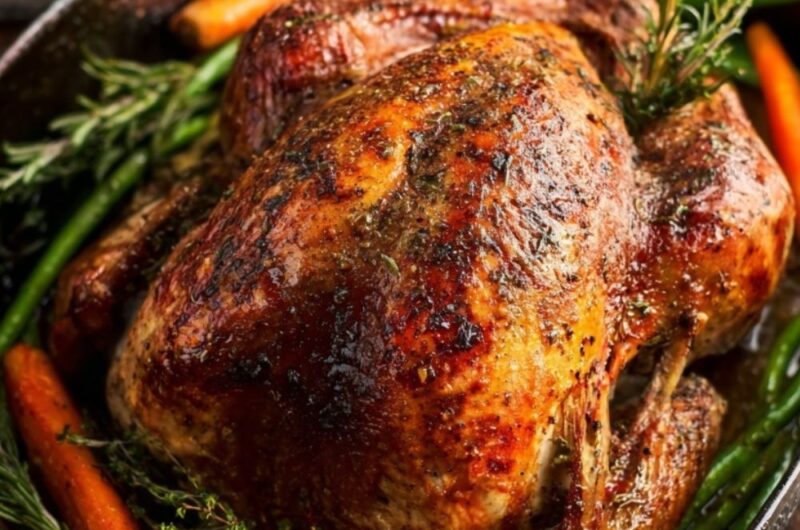
kcalHerb-roasted turkey without citrus or acid. Moist, savory, and gentle—perfect for reflux-safe and low acid holiday meals.
Ingredients
10–14 lb turkey, thawed
¾ cup unsalted butter, softened
(Optional) 2 tsp mild herb
1 Tbsp fresh thyme leaves
1 Tbsp chopped fresh rosemary
Kosher salt & freshly ground black pepper
1 medium yellow onion, quartered
8 garlic cloves, smashed
½ bunch parsley, chopped
Directions
- Let turkey rest at room temperature for 1 hour. Preheat oven to 350 °F (175 °C) during last part of resting.
- Remove neck/giblets, pat turkey dry, tuck wings, season cavity.
- Mix butter, thyme, rosemary (and optional herb substitute). Loosen skin on breast, spread ⅓ butter under skin, rub remaining butter over outer skin. Season skin.
- Stuff onion, garlic, parsley into cavity; tie legs (optional).
- Roast until thigh ~175 °F and breast ~165 °F, about 2 h 20 min to 3 h 30 min. Tent foil if needed.
- Rest 30–60 min, then carve.