 Evelyn Reed
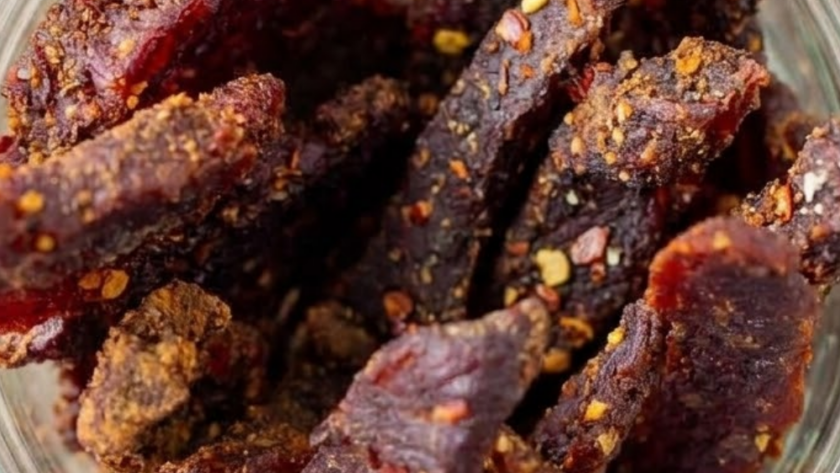
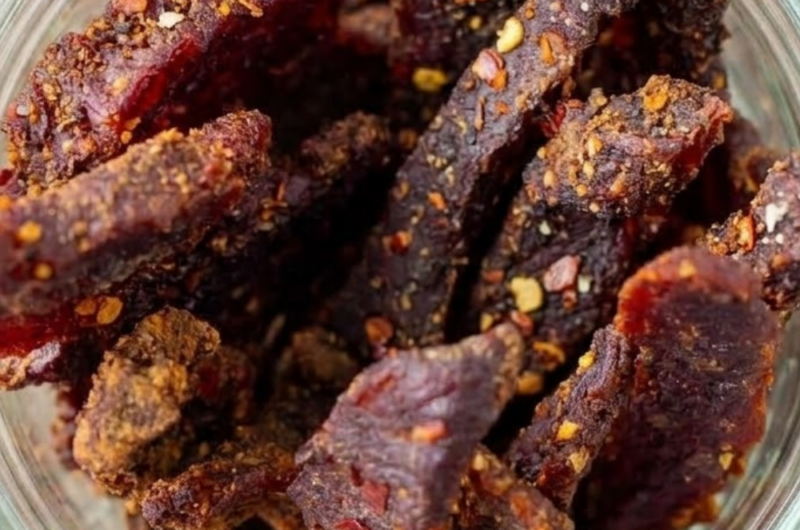
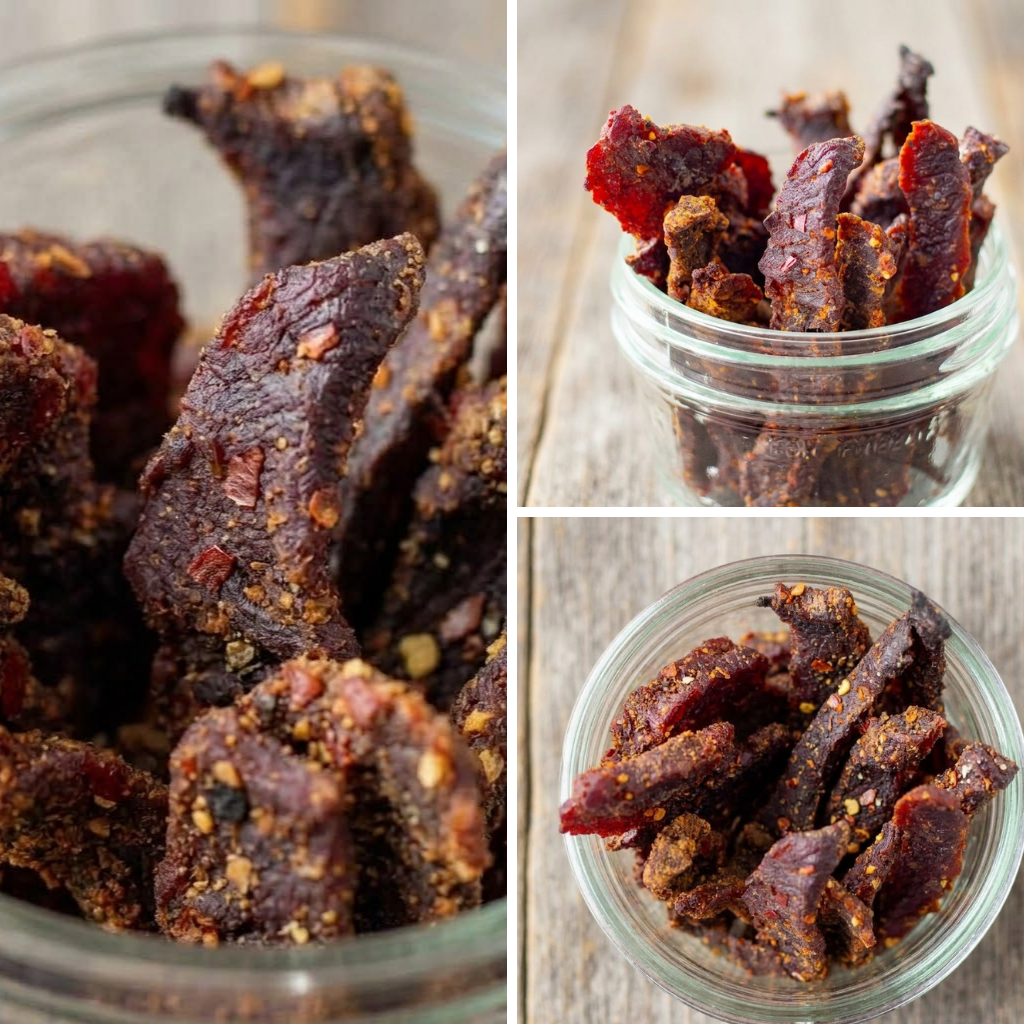
 Flank steak marinates in coconut aminos, garlic powder, onion powder, salt, and pepper before going into a low oven. The strips dry at 175°F for 3 to 4 hours, flipped once halfway through, until firm and chewy. The jerky serves 6 at one ounce per serving and takes about 3 hours 35 minutes with a 30-minute marinade.
Standard jerky marinade calls for soy sauce, and replacing it entirely is what makes this version low histamine. Coconut aminos replaces it at the same quantity, delivering the same salty, slightly sweet depth without the fermented histamine load. Garlic powder, onion powder, and black pepper stay in the mix untouched.
Slicing the flank steak against the grain before marinating determines the final texture. Muscle fibers in flank run in long, tight lines, and cutting with them leaves strips that dry tough and stringy. Cutting across those fibers shortens them, so the finished jerky tears cleanly and chews without resistance
Low Histamine Beef Jerky Recipe
Course: AppetizersCuisine: AmericanDifficulty: Oven6
servings5
minutes5
hours118
kcalLow Histamine Beef Jerky Recipe with flank steak, coconut aminos, garlic powder, onion powder, and black pepper. Oven at 175°F, no soy sauce, serves 6.
Ingredients
- Jerky
1 lb flank steak, thinly sliced against the grain
¼ cup coconut aminos
1 teaspoon garlic powder
1 teaspoon onion powder
1 teaspoon sea salt
1 teaspoon black pepper
1 tablespoon granulated brown sweetener (monk fruit, coconut sugar, or brown sugar)
Directions
- Partially freeze the flank steak for 30 minutes. Slice thinly against the grain into strips about ¼ inch thick.
- In a bowl, whisk together coconut aminos, garlic powder, onion powder, sea salt, black pepper, and sweetener. Add the beef strips and toss to coat. Cover and marinate for at least 30 minutes, or refrigerate overnight for deeper flavor.
- Preheat oven to 175°F. Line a baking sheet with foil and set a wire rack on top. Arrange the strips in a single layer on the rack, not touching.
- Bake for 3 to 4 hours, flipping once halfway through, until the strips are dry and firm. The jerky is done when it bends without breaking but does not snap.
- Remove from the oven and cool completely on the rack. Store in an airtight container.
FAQs
Why is Worcestershire sauce left out of this low histamine version?
Worcestershire sauce contains anchovies, tamarind, and fermented vinegar, all of which are high histamine triggers that can cause a reaction. Skipping it makes no noticeable difference when coconut aminos is already in the marinade. Leaving it out is the right call for anyone cooking on a histamine-sensitive diet.
What cut of beef can replace flank steak?
Top round is the most common substitute and slices cleanly into thin, uniform strips that dry at the same rate as flank. Sirloin tip works at the same thickness and is often easier to find at a lower price. Any substitute should be lean, since fat in jerky turns rancid faster than the dried meat.
How thin should the strips be cut?
Quarter inch is the right target, thin enough to dry in 3 to 4 hours but thick enough to hold a satisfying chew. Strips thinner than ⅛ inch dry too fast and turn crisp and breakable. Thicker strips near ½ inch risk drying unevenly, with a dry outside and a soft center.
What low histamine sauce uses the same coconut aminos base as this marinade?
Coconut aminos works as a marinade base here and doubles as the foundation of a broader low histamine sauce. A low histamine coconut aminos sauce on this site adds honey and ginger to the same base for proteins and noodle bowls. Together the two make coconut aminos worth keeping as a regular pantry item on a low histamine diet.
What other low histamine beef recipe keeps the same fresh-beef approach?
Both jerky and meatballs rely on fresh beef and a clean spice mix with no fermented ingredients. A low histamine beef meatballs recipe on this site builds fresh ground beef around safe herbs and binders with no tomato sauce or vinegar. Together the two give a low histamine beef plan one portable snack and one warm, satisfying main.