 Evelyn Reed
 Whole bone-in chicken breast, white rice, celery, carrots, and onion simmer together in a single pot for about an hour. The chicken goes in whole and comes out to be shredded, and the rice cooks directly in the broth. Prep takes 20 minutes and the recipe serves 6.
White long-grain rice replaces brown throughout for a genuinely low residue result. Brown rice retains its bran layer, which resists digestion even after a long simmer. White rice breaks down smoothly in the broth and leaves no fiber load in the finished bowl.
The chicken breast goes in whole, skinned but still on the bone. The bone releases collagen into the broth over the full hour, producing a depth that boneless breast alone cannot match. Shredding the cooked meat back in at the end keeps every piece tender.
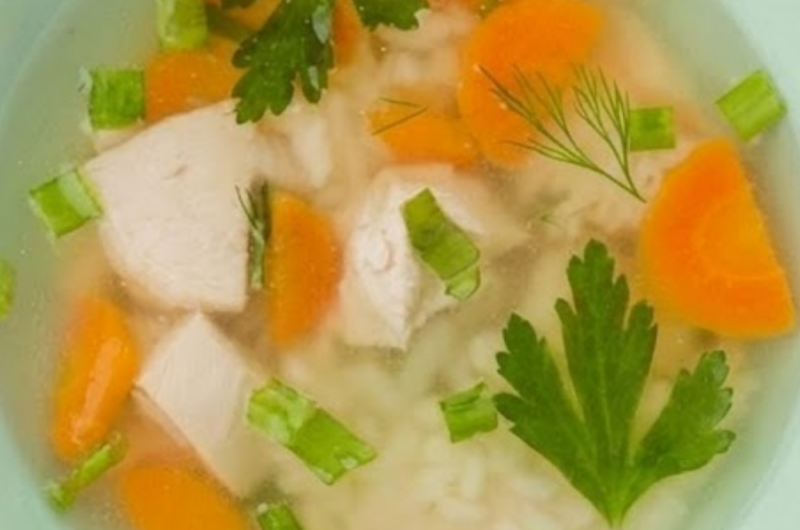
Low Residue Chicken and Rice Soup Recipe
Course: SoupsCuisine: AmericanDifficulty: Easy6
servings20
minutes1
hour350
kcalLow Residue Chicken and Rice Soup Recipe: bone-in chicken breast, white long-grain rice, carrots, celery, and dill simmered in one pot. About 1 hour. Serves 6
Ingredients
- Soup
1 teaspoon olive oil
½ medium onion, chopped (optional)
4 celery ribs, diced
3 medium carrots, diced
½ cup white long-grain rice
Salt and pepper, to taste
2 pounds bone-in chicken breast, skinned
5 cups water or low sodium chicken broth
- To Serve
Chopped parsley (optional)
Directions
- Heat the oil in a large pot over medium heat. Add the onion, celery, carrots, dill, rice, salt, and pepper. Cook, stirring occasionally, until the vegetables are tender and the onion is translucent, about 8 minutes.v
- Add the chicken breast and water (or broth). Bring to a boil, then cover and reduce heat. Simmer for 1 hour, adding more water if the level drops too low.
- Remove the chicken and transfer to a colander. Once cool enough to handle, shred the meat from the bone and return it to the broth to heat through. Discard the bones.
- Taste for seasonings. Add parsley if using. Serve.

FAQs
When should the white rice go in?
White rice added at the same time as the chicken cooks soft and starchy, breaking slightly into the broth. For rice that holds its shape, add it 20 minutes before the end and simmer uncovered for the final stretch. Both approaches are valid — the choice depends on the texture preferred in the bowl.
Can the onion be removed for stricter low residue protocols?
The onion is the ingredient many low residue guidelines recommend removing during active flares or pre-procedure preparation. Sautéing the celery and carrots in a few tablespoons of broth instead of oil, and omitting the onion entirely, still produces a gentle, savory broth from the chicken and dill. The original source’s chef notes address this adaptation directly.
How does this soup store and reheat?
Chicken and rice soup keeps in the refrigerator for 3 to 4 days, though the rice absorbs broth overnight and the soup thickens considerably. Reheat on the stove over low heat with an extra splash of water or broth to loosen the consistency back to a soup. For longer storage, freeze the broth and chicken without the rice and add freshly cooked rice when reheating.
What low residue soup uses pasta instead of rice for a different texture?
Egg noodles cook quickly in the broth and produce a lighter texture than rice in the finished bowl. A low residue chicken noodle soup on this site uses the same chicken-and-broth base with white egg noodles and diced vegetables in about 40 minutes. The two soups follow the same diet guidelines but deliver a noticeably different texture and feel at serving.
What low residue protein dish rounds out this soup into a fuller meal?
A simple baked chicken breast fits the same gentle-digestion guidelines and adds lean protein alongside the soup without introducing fiber. A low residue baked chicken breast on this site produces a tender, lightly seasoned result that can be sliced and served next to a bowl. Together they make a filling meal that stays within low residue requirements.